
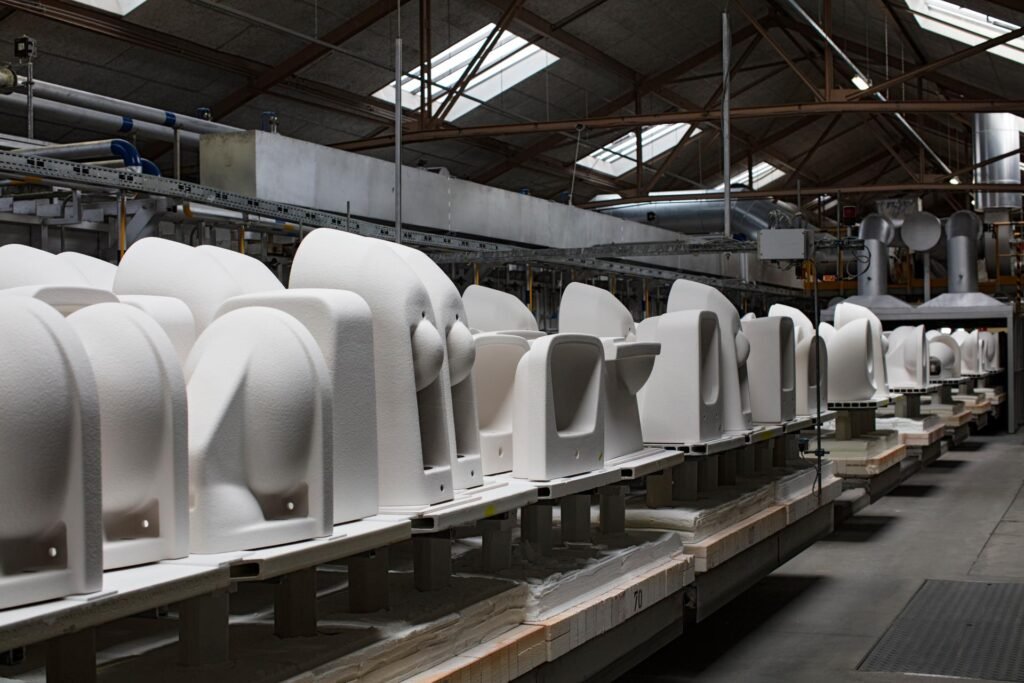
Have you ever wondered what goes into making the perfect basin or toilet? It is a journey that blends high-tech engineering with traditional craftsmanship.
From the raw earth to the final glossy finish, every piece of sanitary ware undergoes a rigorous journey to ensure durability, hygiene, and aesthetic appeal. Here is our 8-step guide to how we produce premium sanitary ware.
1. R&D and Prototyping
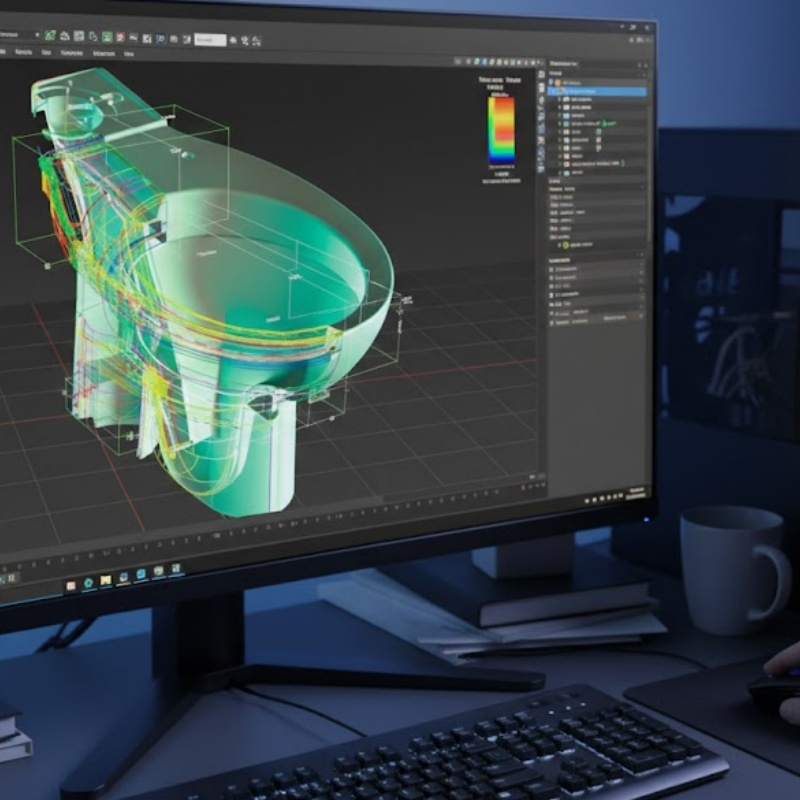
Great products start with a great design. Our design cycle leverages advanced CAD/CAM technology to transform initial sketches into precise 3D prototypes.
Once the design is finalized, production molds are precision-crafted using high-grade resins based on these 3D models. This ensures that every curve and dimension is exact before mass production begins.
2. Material Preparation & Slurrying
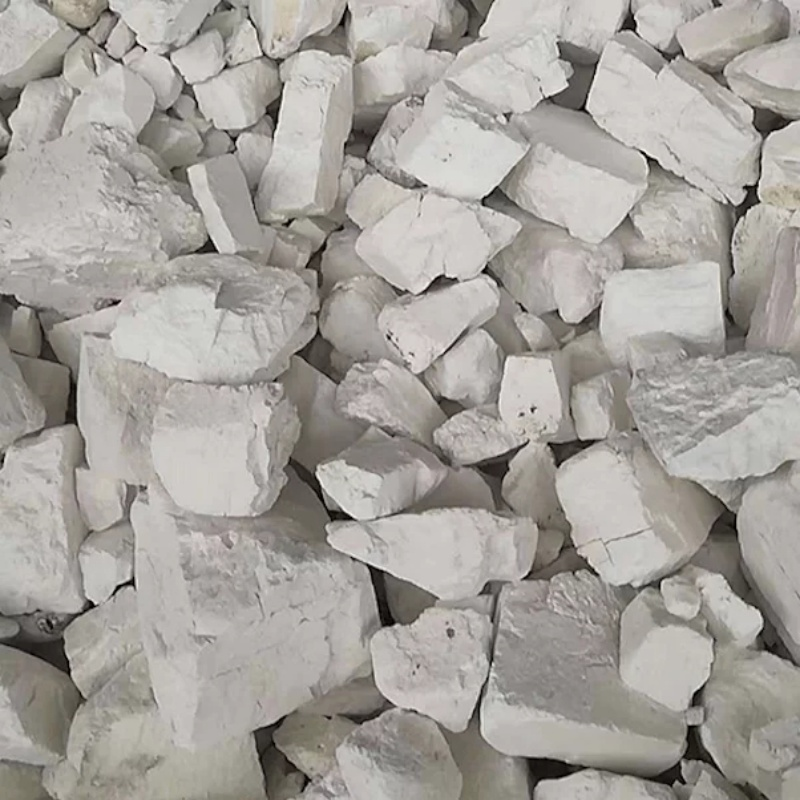
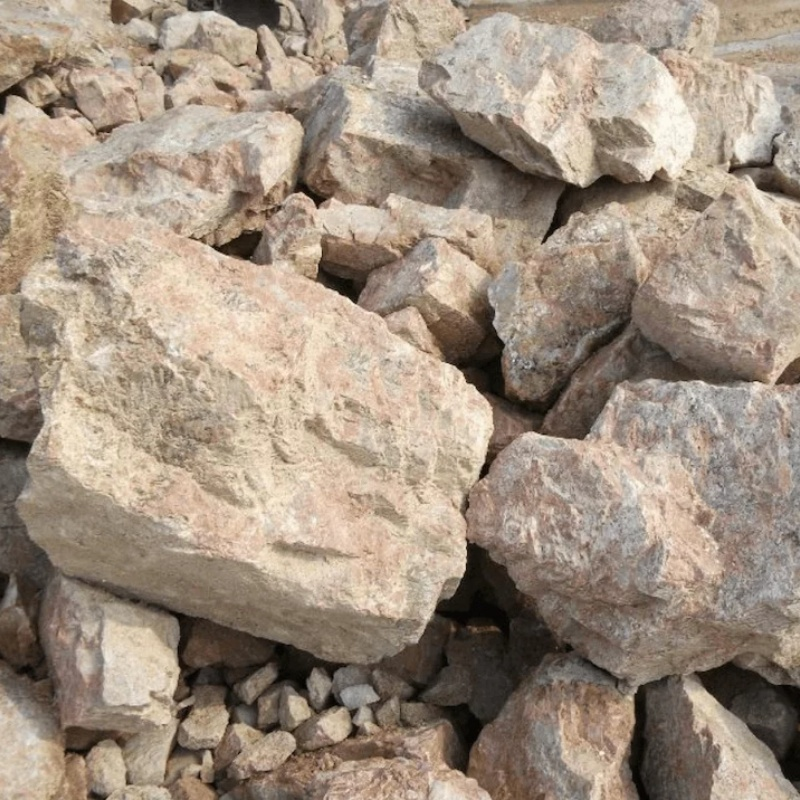
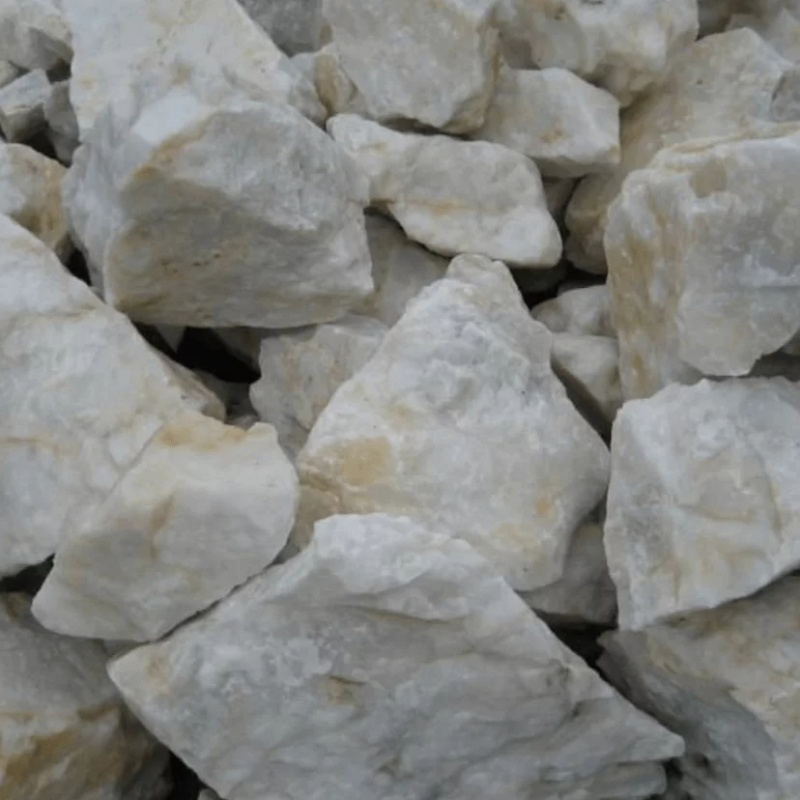
Quality starts at the source. We utilize premium raw materials, specifically a blend of kaolin, feldspar, and quartz.
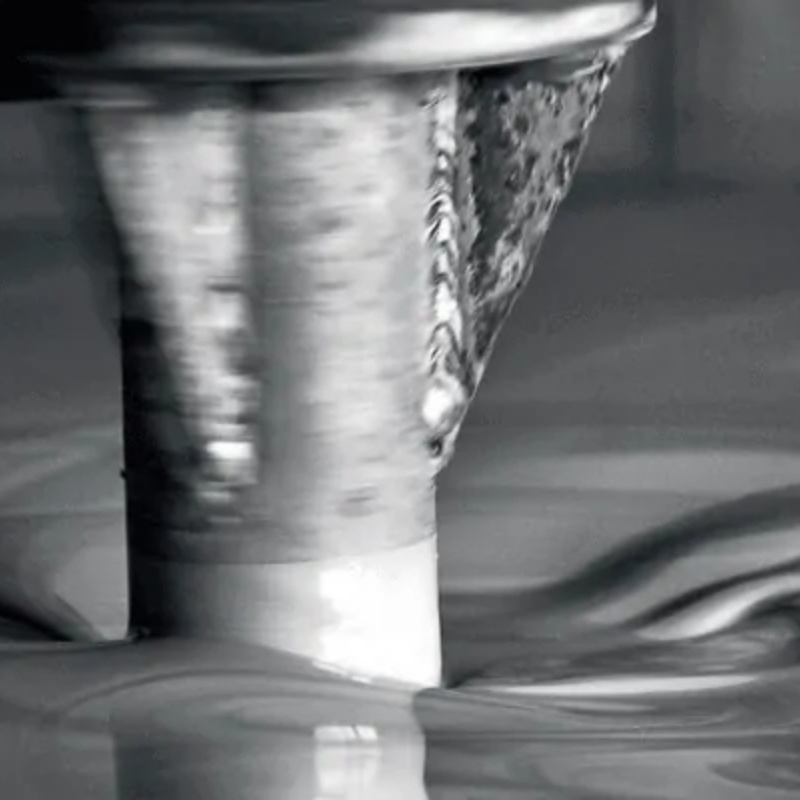
These materials are blended, filtered, and continuously stirred in mud pools to maintain optimal consistency. To maximize efficiency and cleanliness, automated piping systems deliver the resulting clay slurry directly to the molding lines.
3. Advanced Molding Techniques
We employ two distinct molding methods depending on the product requirements:
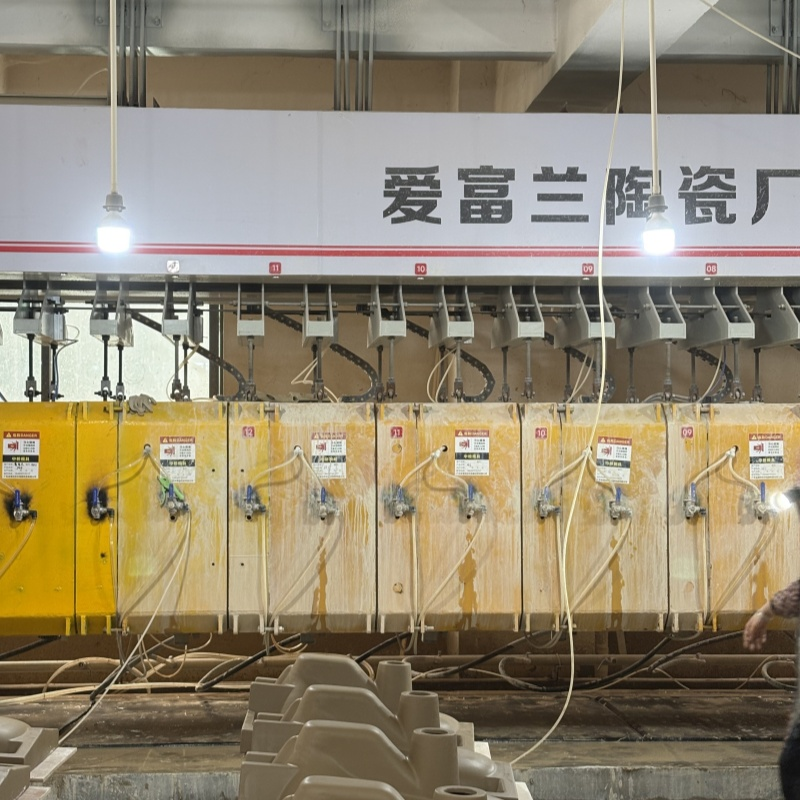
- High-Pressure Casting: Used for select models, this method is 30x faster than traditional molding. It is independent of weather conditions and ensures superior structural integrity.
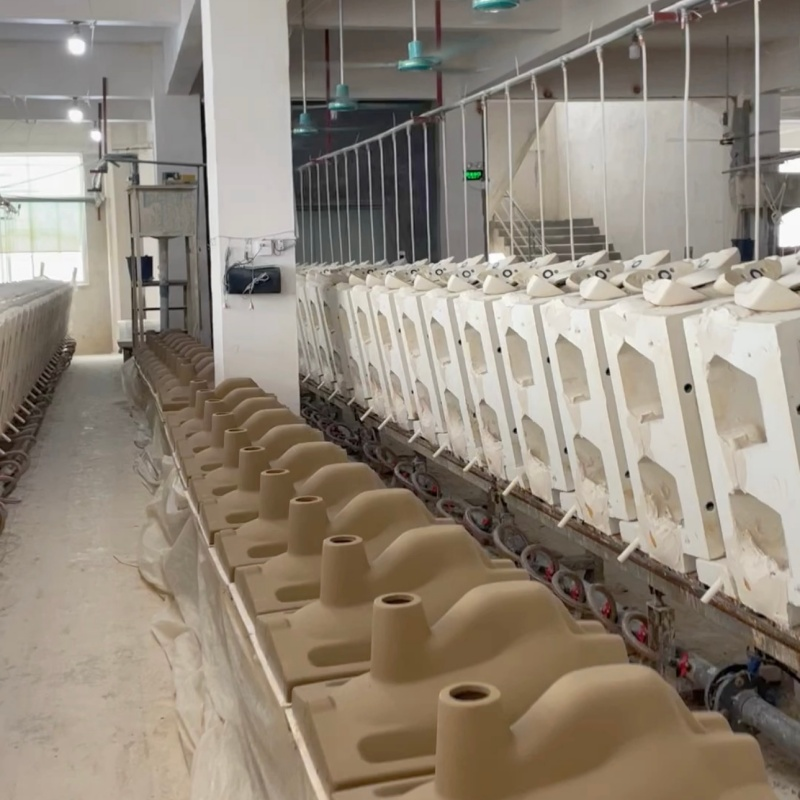
- Standard Molding: Clay is injected into clean molds and left to set until the product’s form is fully stabilized.
4. Strategic Drying & Expert Refining
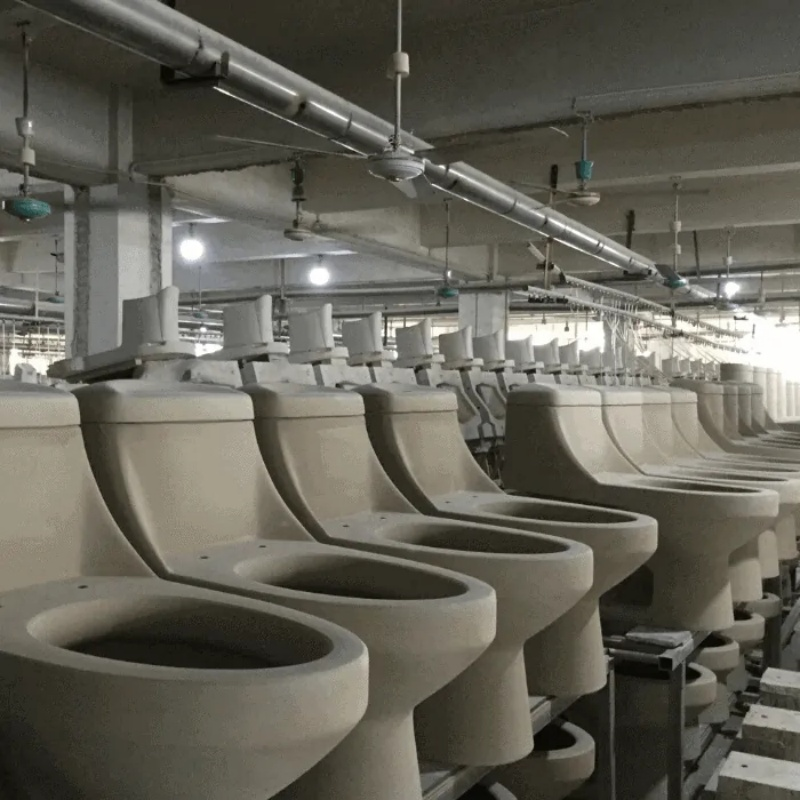
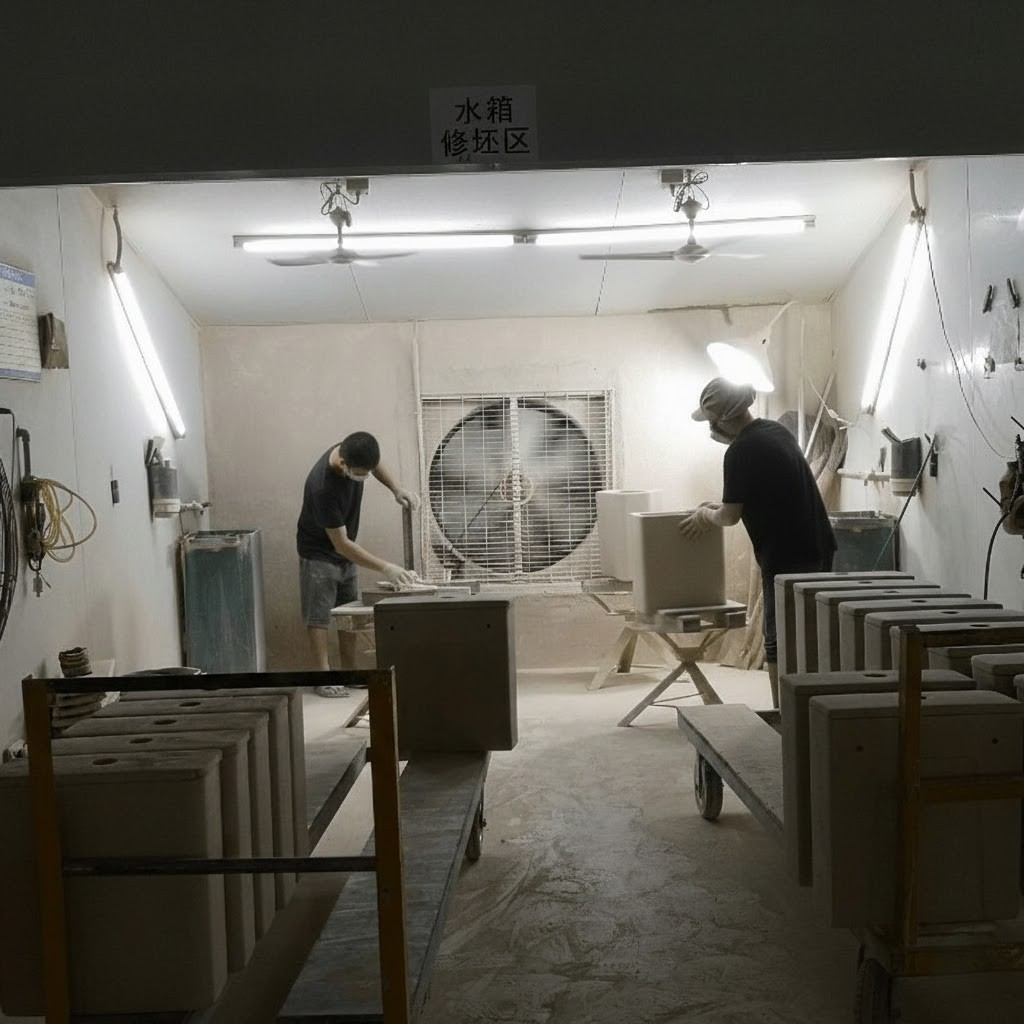
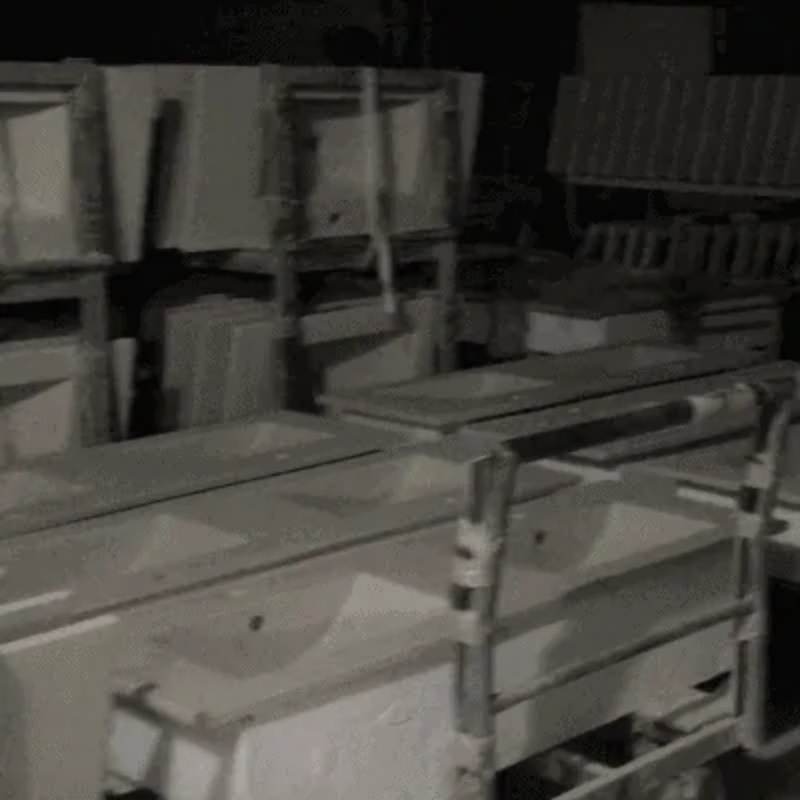
Once the shape is formed, the product enters a critical two-stage drying and finishing process:
- Initial Stage: After primary forming and hole-punching (for faucets and overflows), products are air-dried to 60–70% dryness.
- Manual Refinement: This is where technology meets art. Master craftsmen with over 10 years of experience hand-finish each piece. They use specialized tools to ensure dimensional accuracy, straight edges, and surface smoothness.
- Secondary Stage: Finally, products are moved to a 50–60°C residual heat chamber to reach 80% dryness.
5. Rigorous Semi-Finished Inspection
Quality control happens before the finish is applied. To prevent defects, we apply a kerosene test under high-intensity lighting.
This rigorous inspection allows us to identify microscopic air bubbles, pinholes, or cracks that are invisible to the naked eye. Only flawless pieces proceed to the glazing stage.
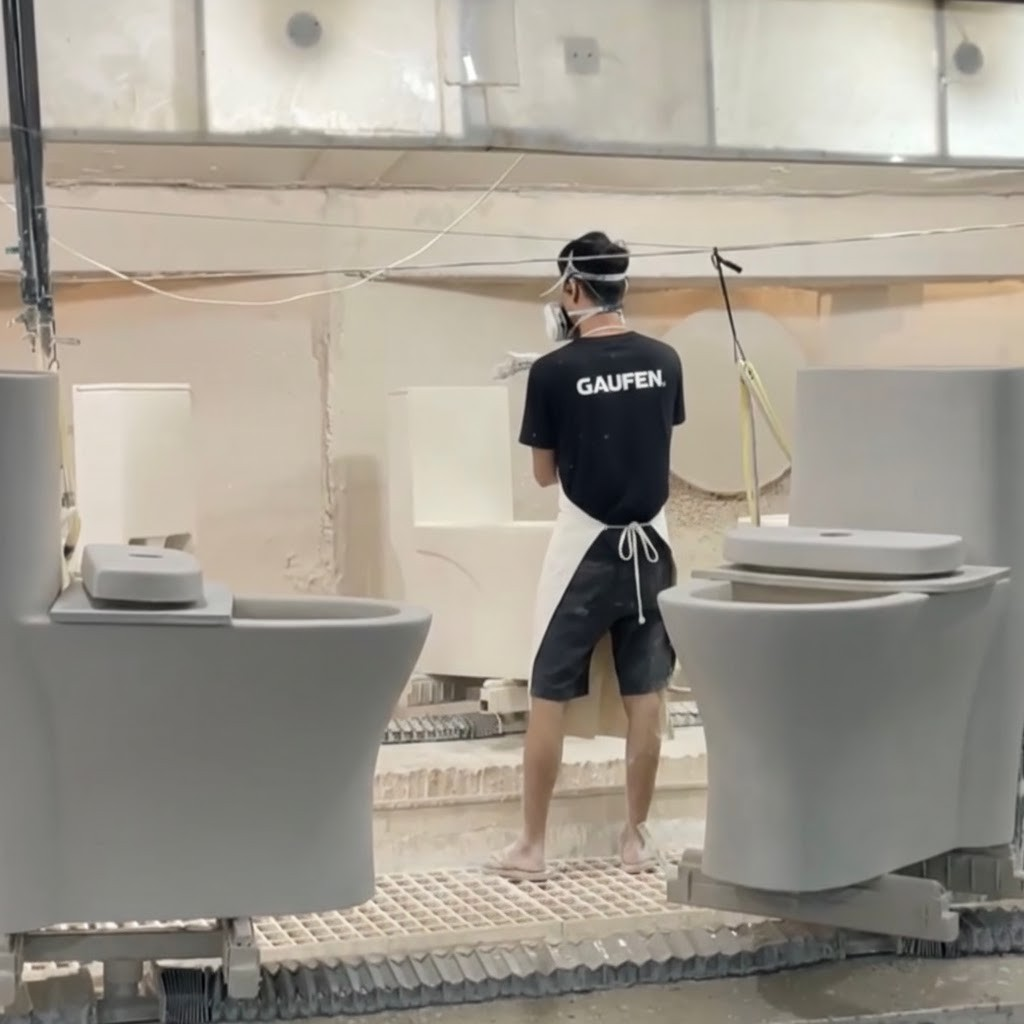
6. Precision Glazing
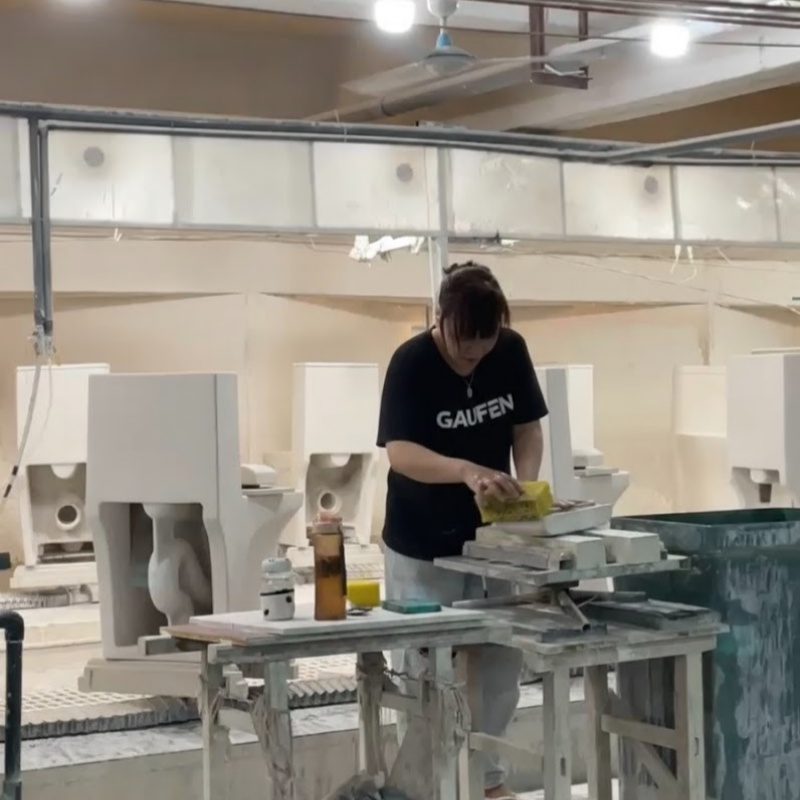
Our dual-layer glazing approach combines automated spraying with manual touch-ups to ensure perfect coverage.We apply a 0.8mm nano-material glaze, resulting in a high-gloss, antibacterial surface. This specialized glaze makes the final product exceptionally easy to clean and resistant to bacteria.
7. High-Temperature Vitrification
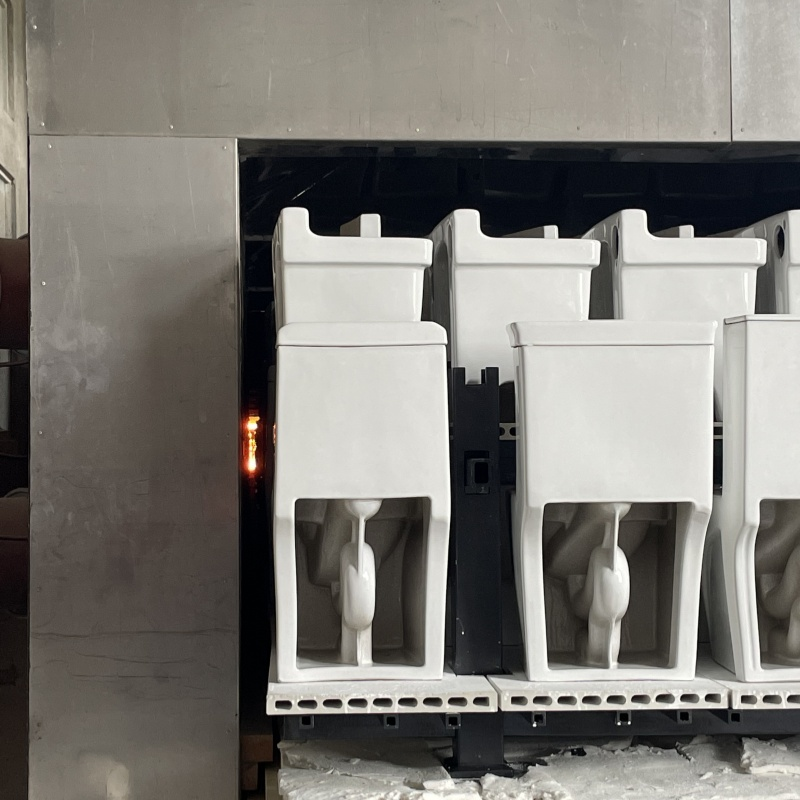
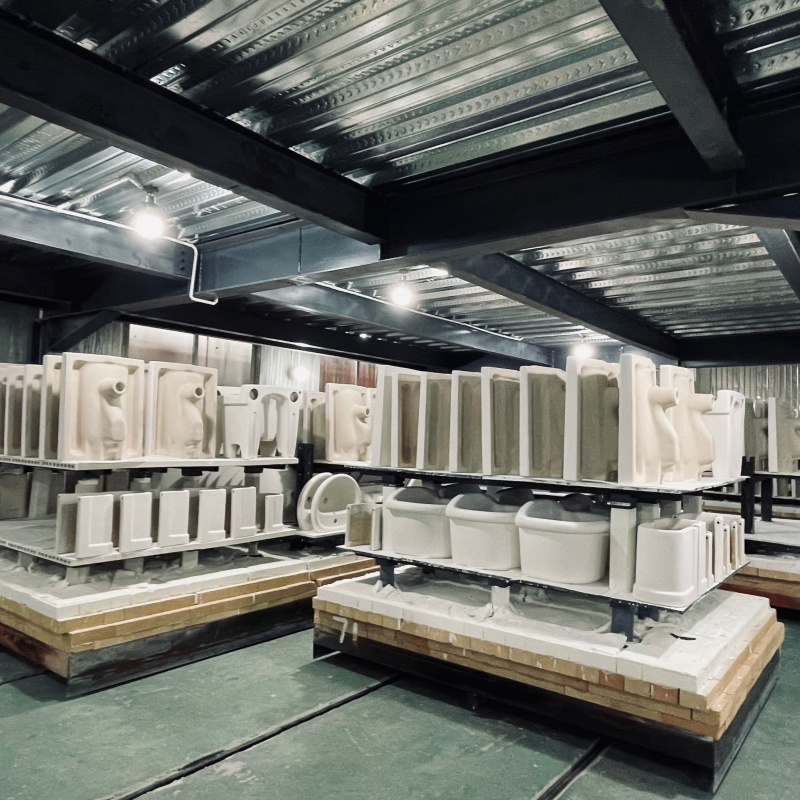
The products are fired in massive 100CBM shuttle kilns for over 17 hours, reaching peak temperatures of 1280°C.
This high heat ensures the ceramic is fully porcelainized (vitrified), making it non-porous and incredibly durable. The firing process follows four strict phases:
- Preheating
- Oxidation
- Firing
- Cooling
8. Final QC & Optimized Logistics
Before a product leaves our factory, it must pass one last hurdle.
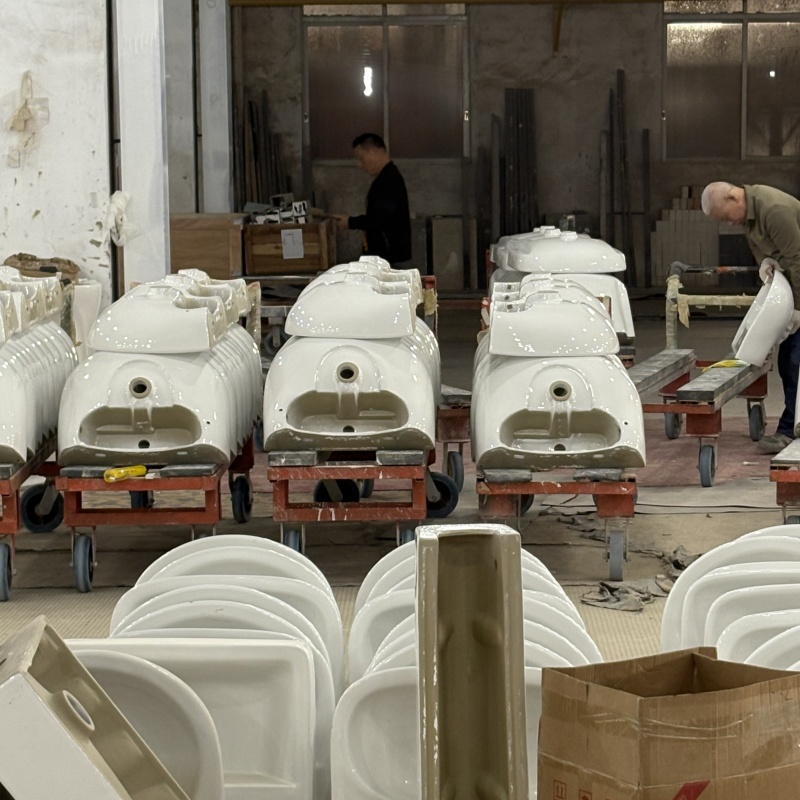
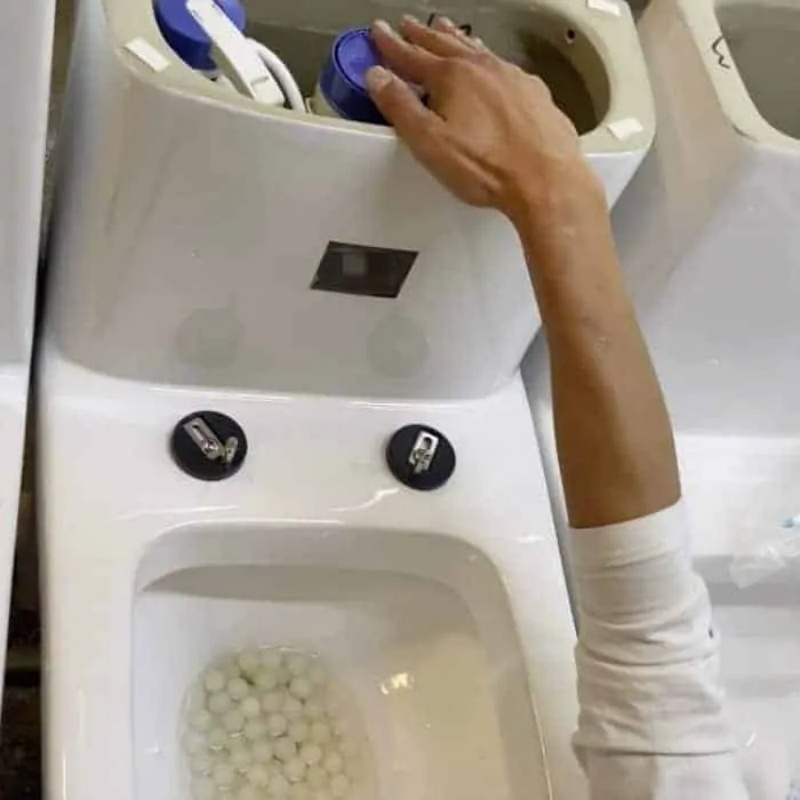
- Testing: Every unit undergoes rigorous flushing tests, water absorption checks, chemical resistance analysis, and stress tests.
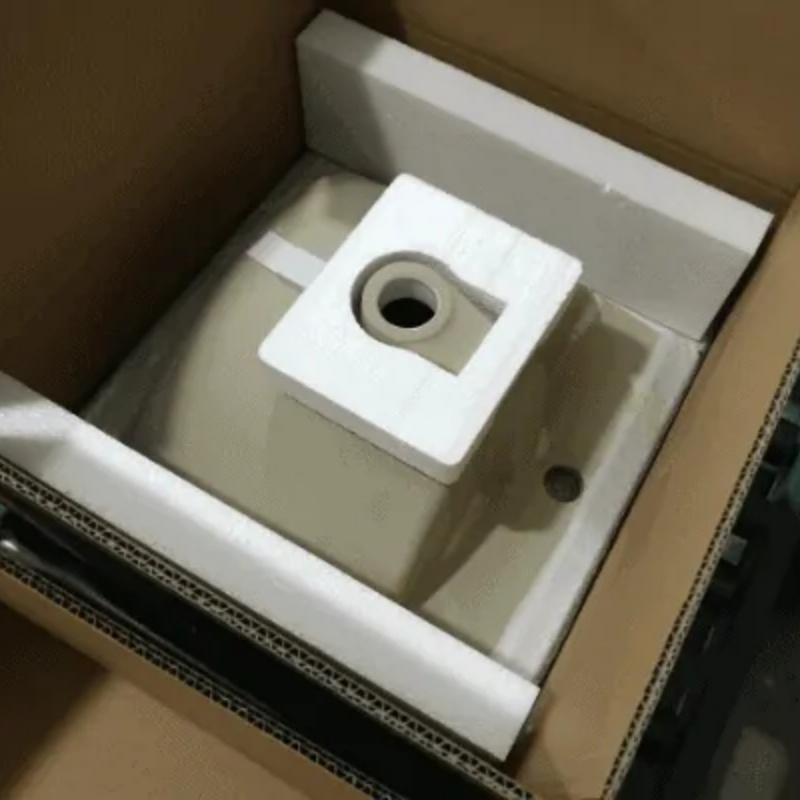
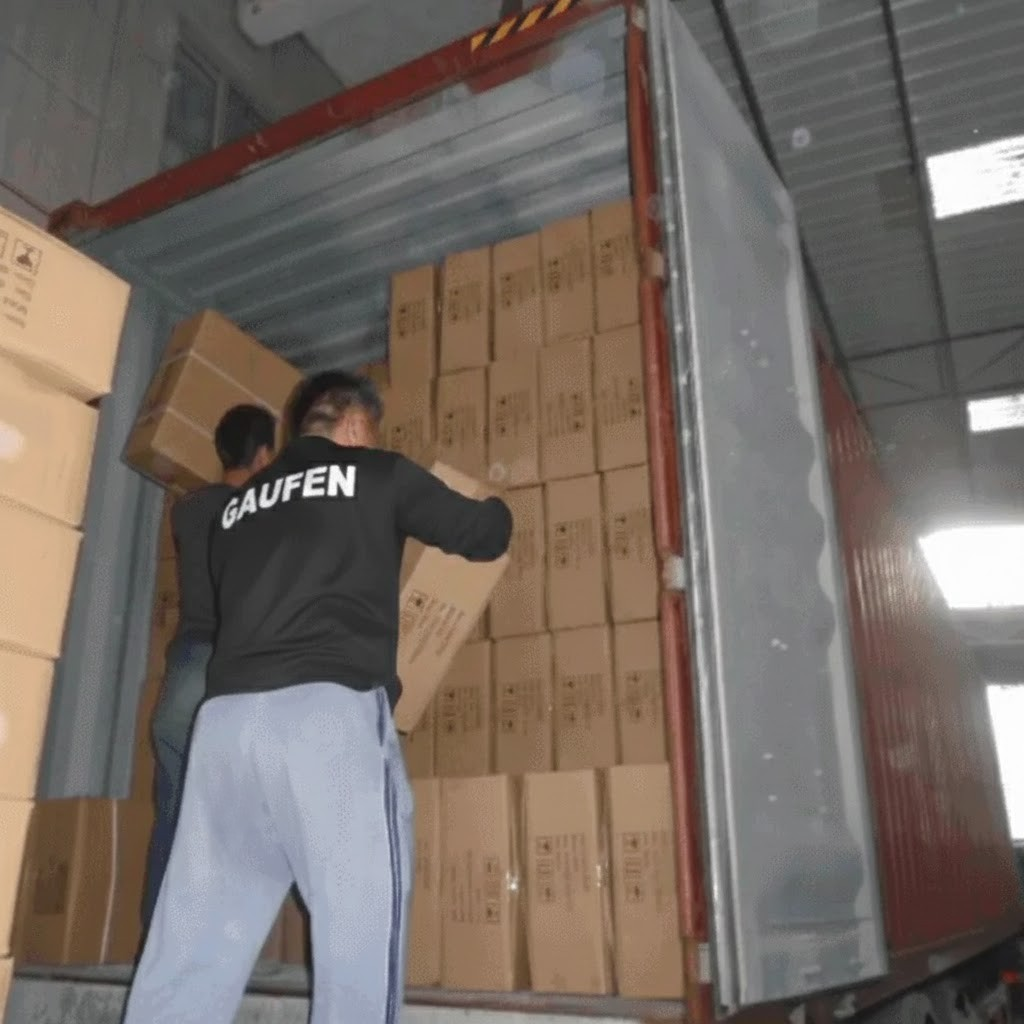
- Packaging & Loading: We offer customized, space-efficient packaging solutions designed to reduce shipping costs and prevent transit damage. Our expert loading teams maximize container utilization to ensure safe and efficient delivery to your door.
ConclusionProducing sanitary ware is a complex process that requires patience, precision, and a commitment to quality. By controlling every step—from the raw kaolin to the final firing—we ensure that our products stand the test of time.